Rotala Blood Red aquarium plant at Aquarium Zone Ballina
All aquatic plants

Aquarium plant / Aquarium Zone · Ballina

Rotala Blood Red.

Rotala rotundifolia 'Blood Red'

Rotala Blood Red brings deep red tips and fine, bushy stems to your background. Learn how to plant, light and trim it for the best colour in Northern Rivers tanks.

Explore care guide

The plant, up close

More than a beautiful leaf.

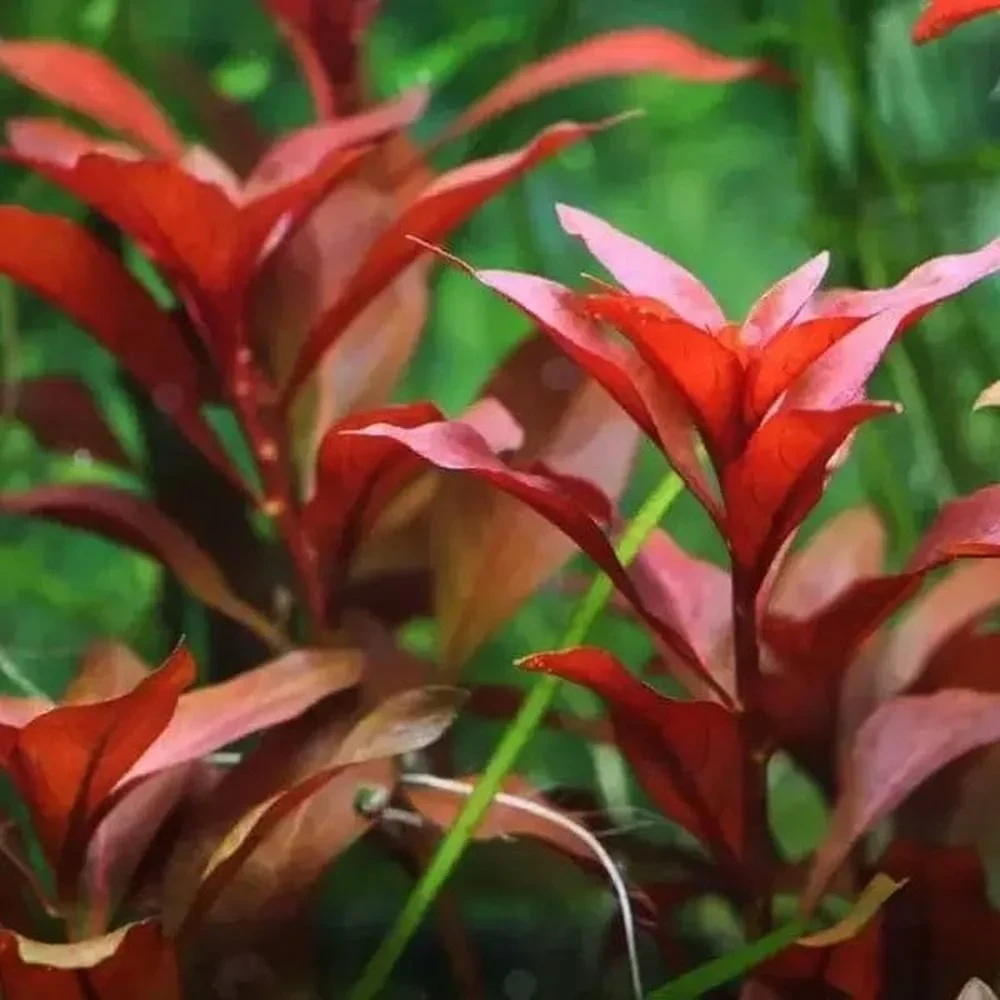
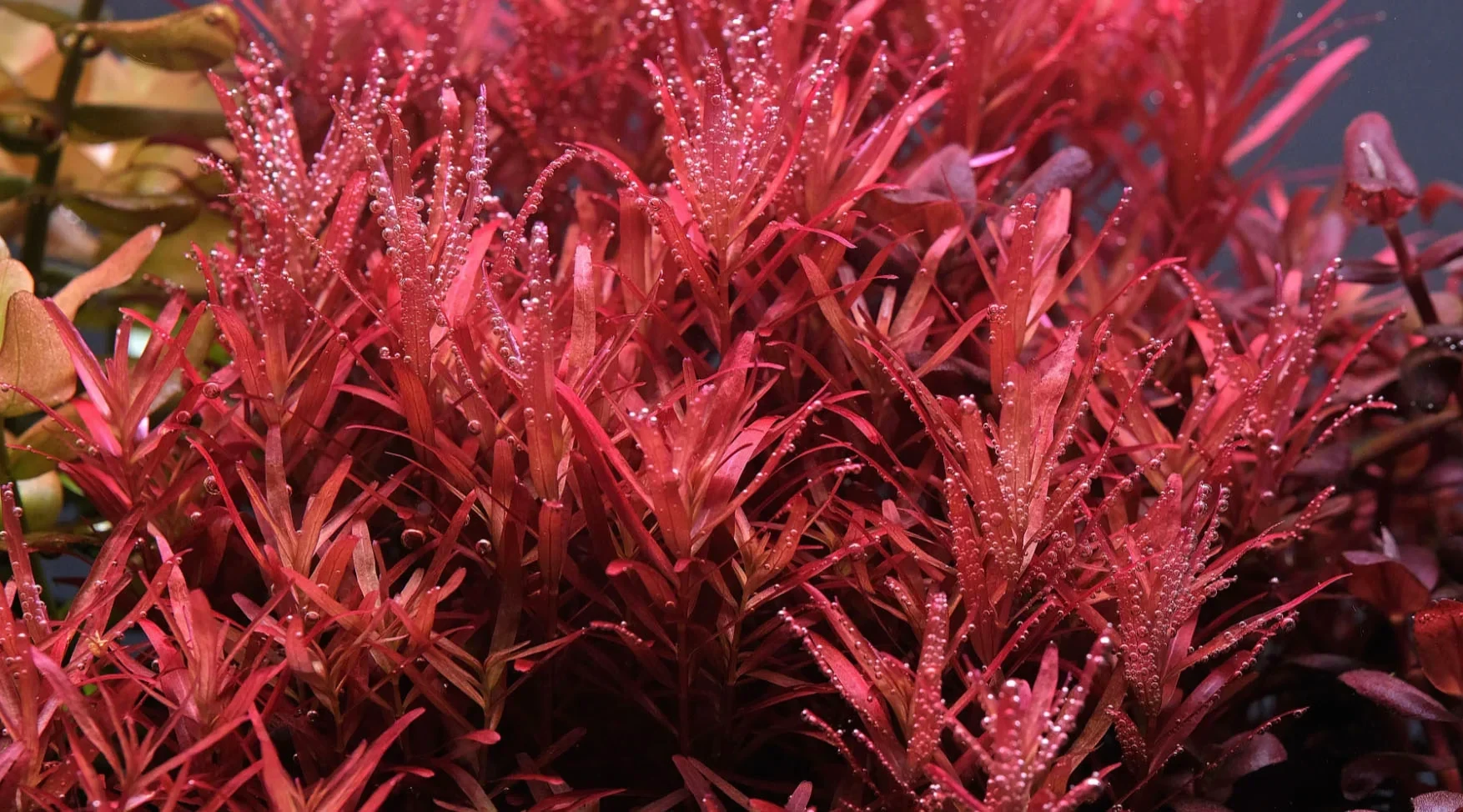
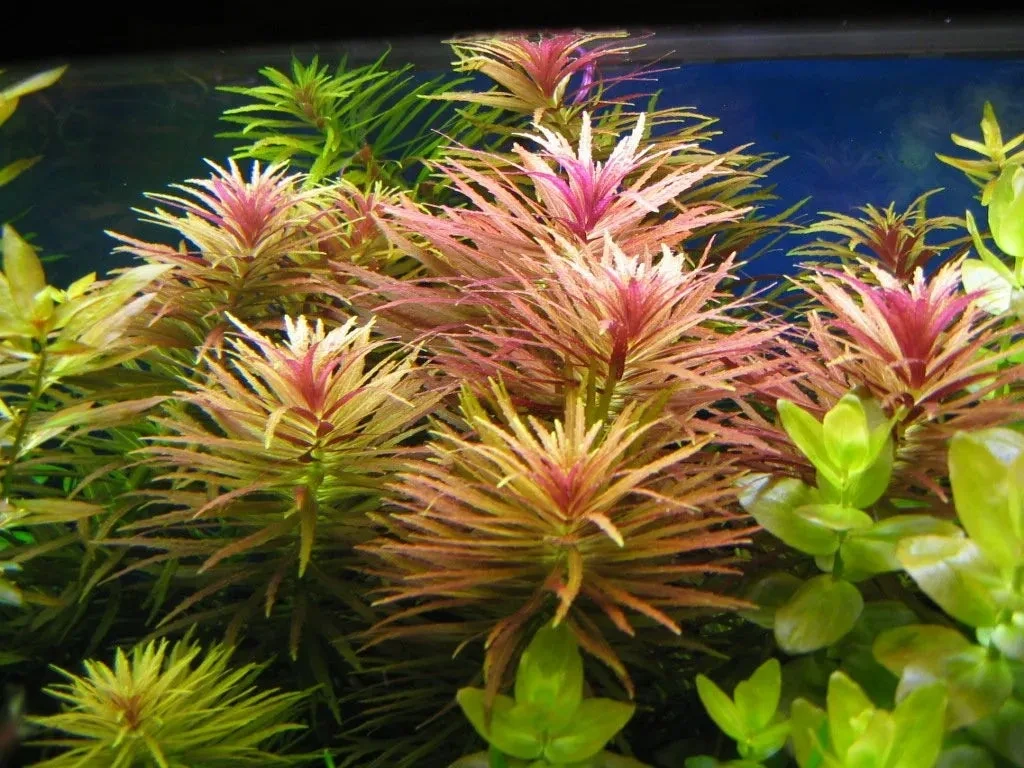
Rotala Blood Red is a red selection of one of the hobby's best-loved stem plants. Its slender stems carry pairs of narrow leaves that sit close together, and the stems branch freely to build a soft, feathery bush. Under strong light the upper growth turns deep red to burgundy. Lower or shaded leaves may stay greener or more orange, which gives the group a natural layered colour.

It looks best in the background or at the back of the midground, planted in a group so it forms one solid block of colour. The fine texture contrasts nicely with broader leaves such as Hygrophila, Cryptocoryne or Echinodorus, and with bright green stems like Limnophila or Rotala 'Green'. Planted on its own against a dark background, a trimmed bush makes a strong focal point. In smaller tanks it can sit further forward if you trim it often.

This plant suits hobbyists who are ready to move beyond the basic beginner plants. It will survive in a well-lit low-tech tank but will stay greener and grow looser. For the richest red and the tightest growth, give it moderate to high light, injected CO2 and regular complete fertiliser. It sits happily with shrimp and peaceful community fish, and shrimp like to pick over the dense stems. Regular trimming keeps it bushy and lets light reach the lower leaves.

Care guide

Grow a better match.

Use these notes to shape a planted setup around the plant, then speak with our team about the aquarium you have in mind.

Plan your setup

Planting and care

Get it established.

Take the stems out of the pot or bunch and gently remove any rock wool or lead weights. Strip the leaves from the bottom few centimetres and push each stem 2–3 cm into a fine substrate with tweezers. Plant them one at a time or in small groups about 1–3 cm apart, so light can reach every stem. A nutrient-rich aquasoil makes life easier. If you use plain gravel or sand, add root tabs.

Give it 7–8 hours of light a day on a timer. Moderate to high light and injected CO2 give the best colour and shape. Dose a complete liquid fertiliser every week, because fast-growing stems use up nitrogen, potassium, iron and trace elements quickly. Keep CO2 and fertiliser steady rather than changing them often. As a routine, do a weekly water change of about 30–50 percent, trim the tops when the stems reach the surface, and remove any decaying leaves. If lower leaves start to fade, check the light, shading, fertiliser and CO2 before changing anything big.
Practical details

Plan the conditions.

Placement
Background
Lighting
Moderate to high Give it about 7–8 hours of steady light a day. Stronger light brings out deeper red tips and shorter, bushier stems, while weaker light gives taller, greener and leggier growth with wider gaps between leaf pairs. Pale or dropping lower leaves and stretched stems point to too little light, and algae on the leaves often means the light is too strong for the CO2 and nutrients on offer.
Growth rate
Fast
Difficulty
Moderate
CO2 requirements
Recommended It will grow without injected CO2, but stems tend to be greener, slower and more open. Injected CO2 gives denser branching, faster growth and stronger red colour, and liquid carbon is only a weaker alternative, not a substitute. When light, CO2 and nutrients are out of balance, algae can settle on the fine leaves.
Typical height
20–40 cm
Origin
A cultivated red selection of Rotala rotundifolia, a species native to South and Southeast Asia, including India, southern China and Indochina. In the wild it grows in wet places such as stream margins, marshes and rice paddies, often out of the water.

Care and growth

Set it up well.

Separate the stems and plant them one at a time or in small, loosely spaced groups about 1–3 cm apart, pushing each one 2–3 cm into a fine, nutrient-rich substrate. Feed regularly with a complete liquid fertiliser that supplies nitrogen, phosphate, potassium, iron and trace elements, and add root tabs if the substrate is inert or worn out. Trim the tops often and replant healthy cuttings to keep the group dense. It does best at about 22–28°C in soft to moderately hard, slightly acidic to neutral water, roughly pH 6.0–7.5. Float the plant in tank water for a short time, rinse it, remove any damaged leaves, then plant it and keep conditions steady. Lower leaves that yellow, go transparent or drop can come from shading, low light, missing nutrients, unstable CO2 or the change from emersed to submerged growth, so check each of these. Too much light without enough nutrients and CO2 can lead to algae on the fine leaves.

Trimming and propagation

Look beyond the first day.

Rotala Blood Red grows as upright stems that branch below each cut. It also sends out side shoots and creeping stems at the base, so a group thickens over time. Trimming is the key to a dense, colourful bush. Cut the stems a few centimetres above the substrate, or at any height you like, and each cut point will usually sprout two or more new shoots. Trimming in layers, so the front stems are shorter than the back ones, keeps light reaching the lower growth.

To propagate it, take healthy top cuttings of about 5–10 cm, strip the lowest leaves and replant them. The tops usually root within a week or two and keep their colour better than old lower stems. When a group gets bare and leggy at the base, pull out the old stems and replant the fresh tops. Most nursery plants are grown out of water, so the rounder emersed leaves may drop or melt after planting. New, narrower submerged leaves soon take over and colour up as the plant settles in. Keep conditions stable and be patient for the first few weeks.

Questions

Plan before you plant it.

For a specific plant, current stock or a planted tank question, speak with the Aquarium Zone team before travelling.

Is Rotala Blood Red available at Aquarium Zone in Ballina?

Plant stock changes week to week, so contact Aquarium Zone before visiting if you are looking for Rotala Blood Red. The team can also suggest similar plants if it is not in stock.

Will Rotala Blood Red suit my aquarium?

Bring your tank size, lighting, substrate, CO2 setup and a photo of your aquascape, and the team can help you decide whether Rotala Blood Red suits it and where to plant it.

Do you serve customers outside Ballina?

Yes. Aquarium Zone serves aquarium hobbyists from Ballina, Lennox Head, Alstonville, Wollongbar, Bangalow, Byron Bay, Lismore, Evans Head, Mullumbimby, Casino and the wider Northern Rivers.

Aquarium Zone / Ballina

Bring your tank to life.

Contact Aquarium Zone to check current availability and talk through whether Rotala Blood Red suits your planted aquarium.

Ask about this plant