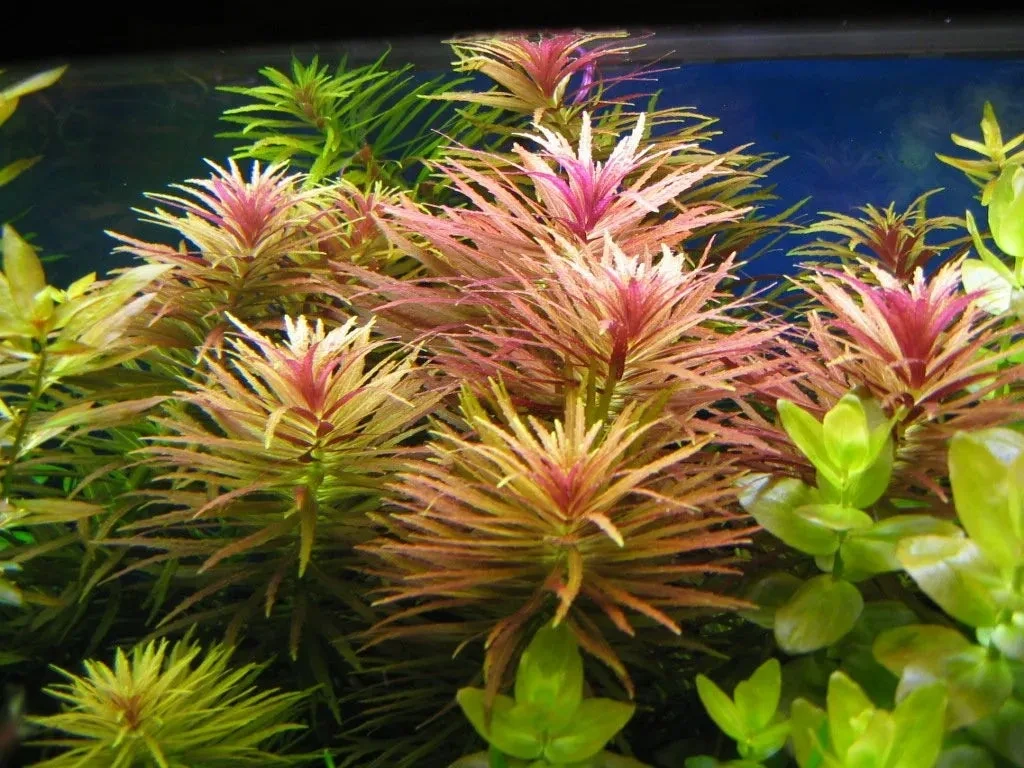
Fine, feathery midground stem with delicate green leaves. Easy care and quick to thicken with trimming. Read planting and pruning tips for Ballina hobbyists.
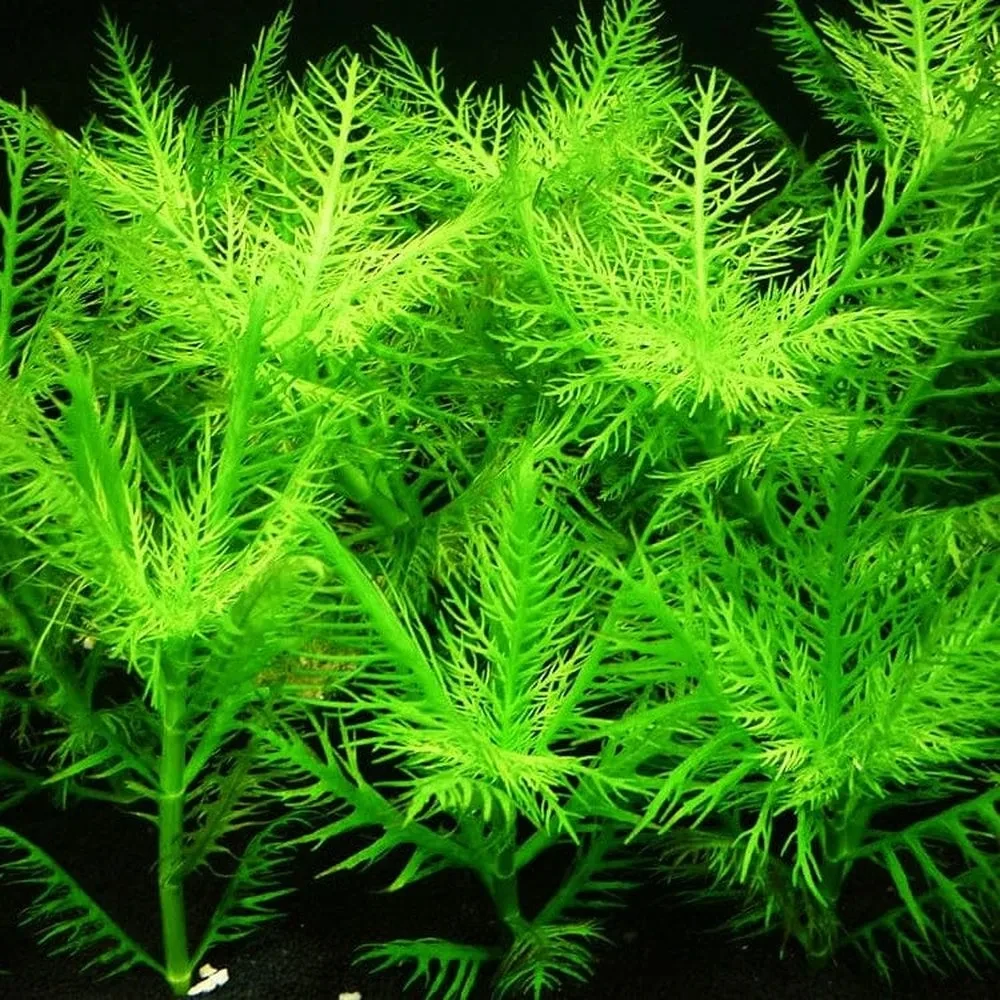
Hygrophila balsamica is a finely divided stem plant with delicate, pinnate to dissected leaves that give it a feathery, soft texture in the midground. Leaves are bright to medium green and form upright stems that branch readily when pinched or trimmed. Aquascapers prize it for the light, airy contrast it provides to broader-leaved foreground plants and for its ability to form flowing, semi-tall stands that add depth and movement to a layout.
In the layout it works well in mixed groups or as a repeating vertical element behind low carpets and in front of taller background stems. Plant stems loosely in small clusters so they do not shade each other; trimmed tips can be replanted to thicken a clump. It pairs nicely with compact crypts, small pogostemon or staurogyne varieties, and with midground ferns where a fine texture is needed to bridge scale between foreground and background.
This plant suits hobbyists who want a low-maintenance midground that still responds visibly to improved conditions. It performs well in low- to moderate-tech setups but will look healthiest and more compact with regular pruning, steady nutrients and optional CO2. It is also suitable in shrimp and community fish tanks, provided trimmings are frequent enough to prevent it becoming too dense.
Care guide
Grow a better match.
Use these notes to shape a planted setup around the plant, then speak with our team about the aquarium you have in mind.
Plant stems individually or in small groups about 1–3 cm apart and press the stem base gently into the substrate so it stands upright. Start with 8–10 hours of light and adjust if stems stretch or bleach; moderate light keeps growth steady and compact. Use a balanced liquid fertiliser and consider root tabs if your substrate is inert; micronutrients support new leaf formation. CO2 injection is optional but will improve response to fertiliser and produce quicker, denser growth; liquid carbon products are a weaker alternative and do not replace injected CO2. Routine maintenance is regular trimming of tips and removing older inner leaves; weekly small trims keep the plant controlled and healthy.
Practical details
Plan the conditions.
Placement
Background
Lighting
Moderate Provide about 8–10 hours of light per day; stronger light speeds growth and produces denser, more compact stems while low light gives looser, leggier growth. Watch for pale, stretched stems as a sign of too little light and brown or bleached patches under excessively intense lighting.
Growth rate
Moderate
Difficulty
Easy
CO2 requirements
Optional It grows acceptably without injected CO2 but benefits from CO2 for faster, more compact growth and improved colour; liquid carbon is not an equivalent substitute. When light, CO2 and nutrients are not balanced you increase the risk of filamentous and pearling algae.
Typical height
30–40 cm
Origin
Native to South and Southeast Asia, reported from India and Sri Lanka. It grows in swampy, marshy habitats and along slow-moving streams and seasonally flooded areas.
Care and growth
Set it up well.
Plant as individual stems or small groups in the midground, pushing each stem 1–2 cm into the substrate so the base is secure but not deeply buried. A fertile substrate helps but regular liquid fertiliser will also support healthy growth; root tabs are useful in deeper substrates for longer-term nutrients. Trim the tops to encourage bushy side-shooting and replant cuttings to create denser stands. Suits a broad temperature range (around 22–28 °C) and neutral to slightly acidic water, but it is tolerant of many typical community aquarium conditions. Acclimatise emersed-grown stems slowly; expect some older emersed leaves to die back as new submerged leaves form. Common issues are leggy stems from low light, yellowing from nutrient deficiency, and occasional algae on slower inner leaves if maintenance is neglected.
Trimming and propagation
Look beyond the first day.
Hygrophila balsamica spreads and thickens by producing side shoots from nodes along the stem; cuttings root easily. Trim the growing tips to encourage branching and replant the trimmed tips to form new clumps. For a fuller look remove the top 3–5 cm periodically; longer-term maintenance involves thinning older stems from the base to allow light to reach lower leaves. Newly added emersed-grown stems often lose older leaves as submerged leaves develop; this is normal—leave the plant undisturbed and new growth will replace the lost foliage. Cuttings root rapidly in substrate or in a floating raft and a single healthy node can form a new plantlet.
Questions
Plan before you plant it.
For a specific plant, current stock or a planted tank question, speak with the Aquarium Zone team before travelling.
Is Hygrophila balsamica available at Aquarium Zone in Ballina?
Plant stock changes week to week, so contact Aquarium Zone before visiting if you are looking for Hygrophila balsamica. The team can also suggest similar plants if it is not in stock.
Will Hygrophila balsamica suit my aquarium?
Bring your tank size, lighting, substrate, CO2 setup and a photo of your aquascape, and the team can help you decide whether Hygrophila balsamica suits it and where to plant it.
Do you serve customers outside Ballina?
Yes. Aquarium Zone serves aquarium hobbyists from Ballina, Lennox Head, Alstonville, Wollongbar, Bangalow, Byron Bay, Lismore, Evans Head, Mullumbimby, Casino and the wider Northern Rivers.